 By Private Label Leather · Published · 5 min read
Private-label manufacturing means a factory makes a product to your specification and finishes it with your brand. For leather goods the process is similar whether you are ordering jackets, bags or wallets.
1. The brief
Everything starts with what you want made. A complete tech pack is ideal, but photos of a reference product with clear notes on what to change are often enough to start. The more precisely you describe leather, construction and branding, the more accurate the quotation.
2. Quotation
The manufacturer reviews the brief, asks about anything unclear, and quotes a unit price for stated quantities, plus sample cost, minimum order and an estimated production time. Check that the quotation names the leather grade and finish, lining, hardware and branding method — vague quotations lead to disputes later.
3. Sampling
A pattern is made and a sample produced in the agreed materials. Expect at least one round of changes: fit, proportions and branding placement often need adjusting once you see the real product.
4. Approval
Approve the final sample in writing. That sample is now the standard the bulk order is made and inspected against. Keep one yourself; the factory keeps one too.
5. Bulk production
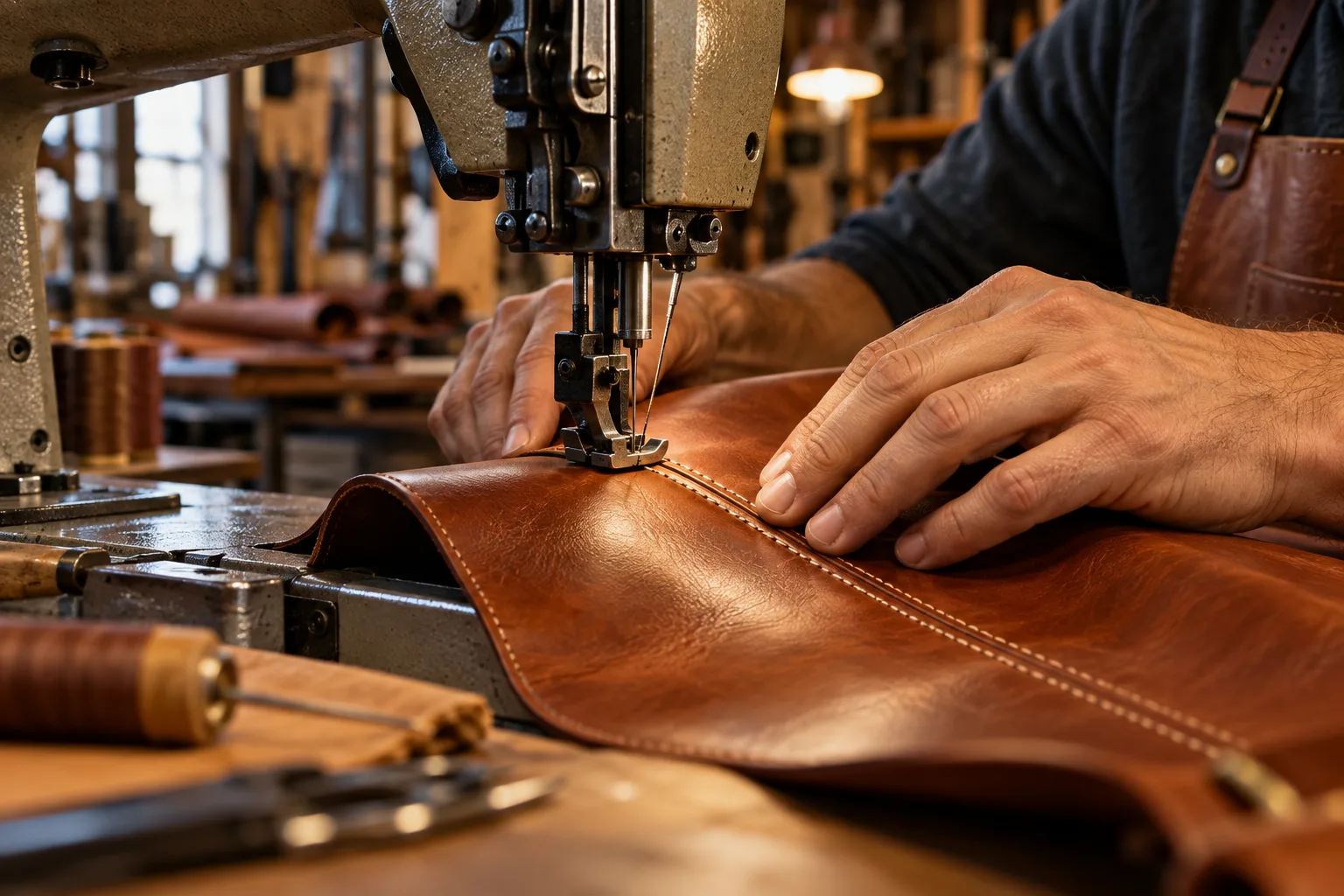
Leather and components are sourced to match the sample, then products are cut, stitched and finished. Ask for progress photos at key points if you want visibility.
6. Inspection and shipping
Finished goods are checked against the approved sample and your defect criteria, packed to your instructions, and shipped under the agreed trade terms. Many buyers also appoint an independent inspection company at this stage.
Where projects slow down
- Unclear briefs that need several rounds of questions
- Late changes after sample approval
- Custom hardware or packaging ordered late
- Logo artwork supplied in low resolution
Next: preparing a tech pack, or see how we handle OEM and private-label orders.